Universal Component Support
We designed the Daisy Platform to be compatible with a wide range of OEM parts, components and products.
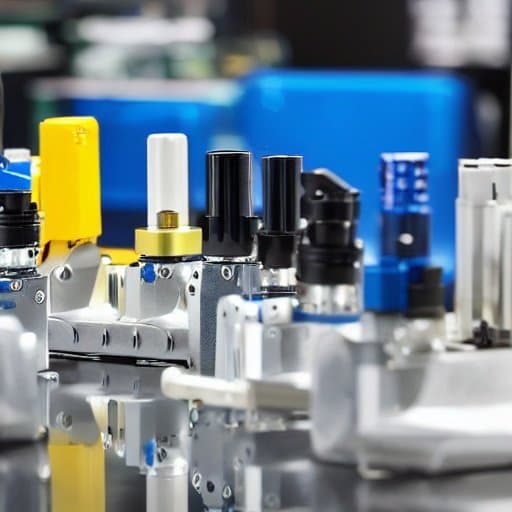
Open Hardware for Open Science
The Daisy platform was built on the principle that researchers should never be locked into a single vendor's ecosystem for consumables, fittings, or peripheral components. Unlike proprietary systems that require branded tubing, connectors, and cartridges at premium prices, every Daisy module uses industry-standard interfaces and connections. This means you can source compatible parts from any number of OEM suppliers, choosing the options that best fit your budget and application requirements. From standard Luer-lock fittings to common tubing diameters, the platform speaks the universal language of laboratory hardware.
Broad Compatibility by Design
Our engineering team actively tests and validates compatibility with components from leading laboratory supply manufacturers. The Daisy platform supports standard fluidic connections including one-sixteenth inch and one-eighth inch OD tubing, ten-thirty-two and one-quarter-twenty-eight threaded ports, and common quick-connect fittings. Electrical interfaces follow established protocols, enabling integration with third-party sensors, actuators, and data acquisition systems. This broad compatibility ensures that the Daisy platform can serve as the central hub of a heterogeneous laboratory setup, coordinating instruments and components from multiple vendors through a single software interface.
The Benefits of an Open Ecosystem
An open hardware ecosystem delivers tangible benefits at every stage of the research lifecycle. During procurement, labs can compare prices across multiple suppliers rather than accepting a single vendor's markup. During experiments, researchers can swap in specialized components for specific applications without redesigning their entire setup. And over the long term, the availability of multiple compatible suppliers protects against discontinuation risks and supply chain disruptions that can halt research programs dependent on proprietary parts. By choosing an open platform, you invest in flexibility and resilience alongside performance.