It is Time You Reclaimed Your Benchtop Space!
If you're a small biotech startup in a bustling incubator space, you already know how precious every square inch of lab space is.
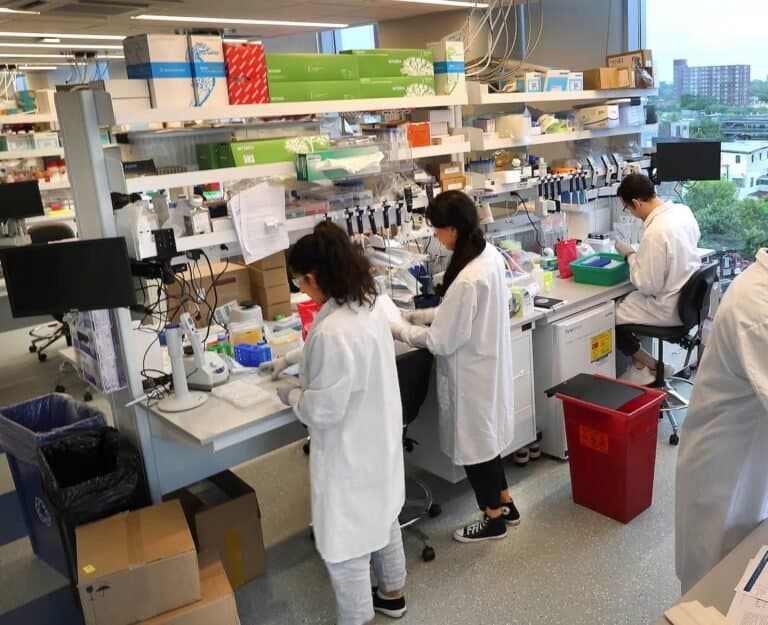
The Lab Space Crunch
For biotech startups operating out of incubator spaces, lab real estate is among the scarcest and most expensive resources available. Shared facilities often allocate just a few feet of bench space per team, and that space must accommodate instruments, consumables, notebooks, and active experiments simultaneously. As companies grow and their workflows become more complex, the temptation to acquire additional instruments creates a spatial bottleneck that can physically limit the scope of research. Traditional laboratory equipment, designed for large institutional labs, simply was not built with these constraints in mind.
Why Conventional Instruments Fall Short
Most commercial lab automation platforms occupy significant benchtop footprints, often requiring dedicated tables or even entire bay sections. A standard liquid handling robot, for instance, might consume four to six square feet of prime bench space while performing a task that only requires a fraction of that area. Worse, many instruments demand additional clearance for maintenance access, ventilation, and peripheral equipment like waste containers and reagent reservoirs. For startups paying premium rates per square foot, this inefficiency translates directly into higher operating costs and constrained experimental capacity.
Compact Modular Solutions
The Daisy platform was designed from the ground up to address the space constraints of modern laboratory environments. Each module features a compact form factor that can be mounted vertically, stacked, or arranged in tight configurations that traditional instruments cannot match. A complete fluid handling setup comprising a pump, valve manifold, and sensor module occupies roughly the same footprint as a standard lab notebook. This space efficiency means startups can deploy sophisticated automation workflows without sacrificing bench area for other critical activities.
Scaling Without Expanding
Perhaps most importantly, the modular architecture means that adding new capabilities does not require clearing additional bench space. New modules integrate into the existing footprint through the platform's daisy-chain connectivity, and the centralized software interface eliminates the need for multiple computer screens and controllers. Labs can effectively double or triple their automation capacity within the same physical envelope, freeing up space for the hands-on experimental work that still requires a human touch.